
Notes from the Field
State Burns Extinguish Impacts of Wildfire on Sinlahekin Wildlife Area
By Matt Danielson, WPFC Board of Directors
The steep valley walls of the Sinlahekin (sin-luh-HEE-kin) Wildlife Area rise out of an ancient glacial river valley and tower over aspen groves, bunchgrass meadows, wetlands, and rolling hills of pine forest. In 1939, the Okanogan County site near the U.S.-Canada border became Washington’s first wildlife area, which the Washington Game Department used to maintain winter range habitat for mule deer. Today, the Sinlahekin Wildlife Area is managed by the Washington Department of Fish and Wildlife (WDFW) for diverse wildlife species and recreational opportunities for the public.
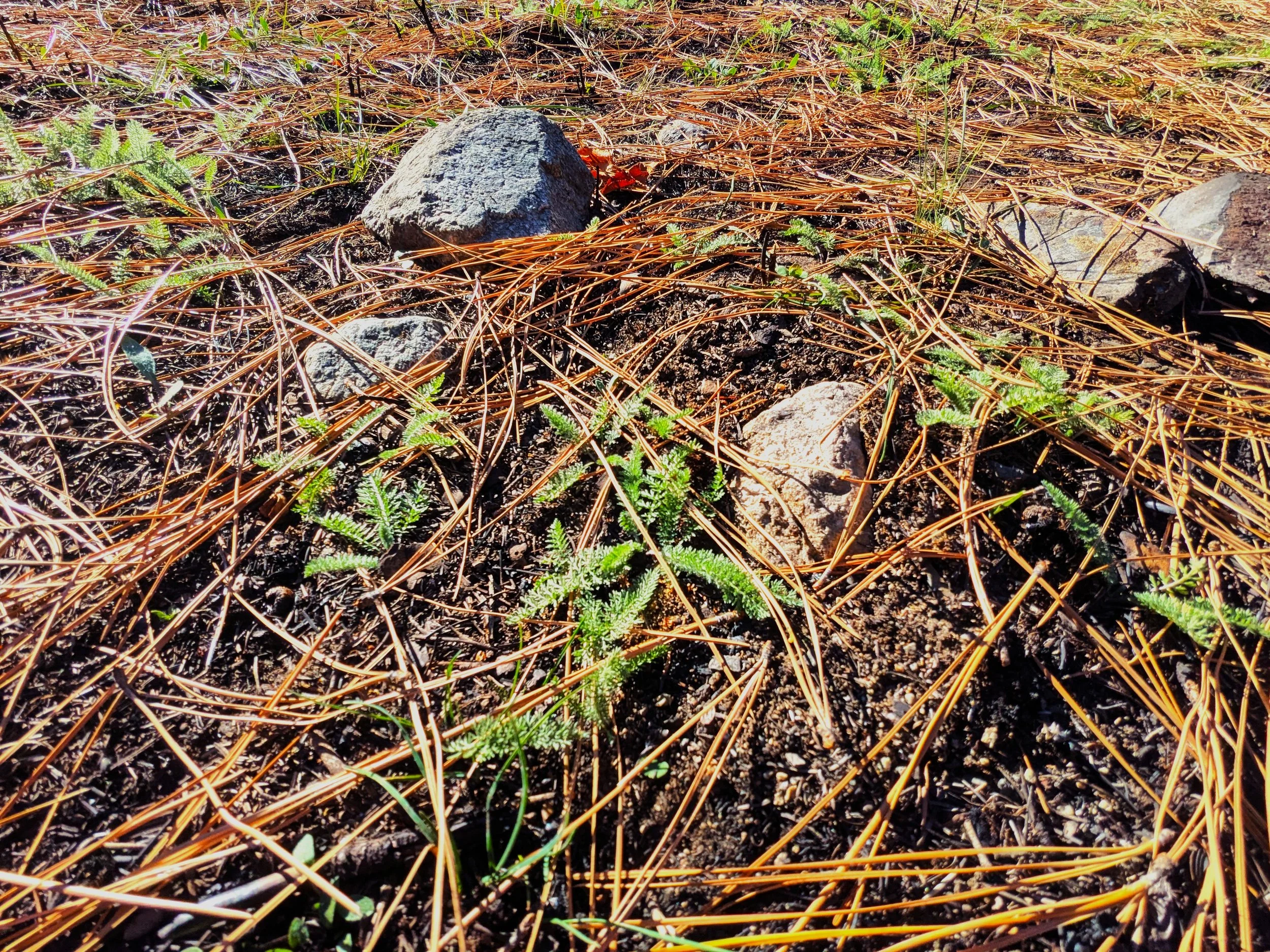
Yarrow, penstemon, and bunchgrass poke out between pine needles after the 2026 Sinlahekin Fire. Credit: Matt Danielson
This summer, a lightning strike ignited a wildfire that spread rapidly across the Wildlife Area and into surrounding areas, while other blazes burned elsewhere in Eastern Washington including the Kaiser, Modrite, Spokane Complex, and Little Giant fires. Despite stretched resources and intense winds, the impacts of the Sinlahekin Fire were tempered in the Wildlife Area by previous burning and prescribed fire treatments.
The Sinlahekin Valley is considered by many in the burning community as a standout example of landscape resilience achieved through burning. Indigenous people have lived in the Sinlahekin Valley and burned for thousands of years to cultivate plants and animals and for other cultural purposes. The history of Indigenous people in the Sinlahekin is evident through art, story, traditions, and records maintained by Tribes and Indigenous communities living on both sides of the international border. In recent years, the Lower Similkameen Indian Band has revived Indigenous fire stewardship near Nighthawk to restore traditional ecosystems and wildlife habitat not far from the Sinlahekin Wildlife Area.
Starting in the early 20th century, federal and state policies mandated full suppression of fires to protect property. By the end of the 1990s, the Sinlahekin Valley had not burned in decades. The Valley was carpeted by a dense, young forest of Douglas-fir and ponderosa pine. Starting in the mid-2000s, WDFW initiated plans to restore fire to the Sinlahekin Valley. The wildlife area manager, Dale Swedberg, sparked an information campaign to educate local communities, collaborate with WDFW staff, and form a prescribed fire crew.
Since the first prescribed burns were implemented two decades ago, Swedberg continued to lay the groundwork for more prescribed fire. In 2011, he founded the Washington Prescribed Fire Council to advance the safe, effective, and expanded use of prescribed fire across Washington. A team formed to establish a fully-operational WDFW Prescribed Fire Program, capable of burning lands across Washington’s diverse landscapes. The Sinlahekin Wildlife Area continued to implement prescribed burns until most of the wildlife area was treated with fire by 2014 and has conducted maintenance burning in the years since. In 2021, the Department of Natural Resources partnered with WDFW in the Sinlahekin Wildlife Area to conduct its first prescribed burn in twenty years.
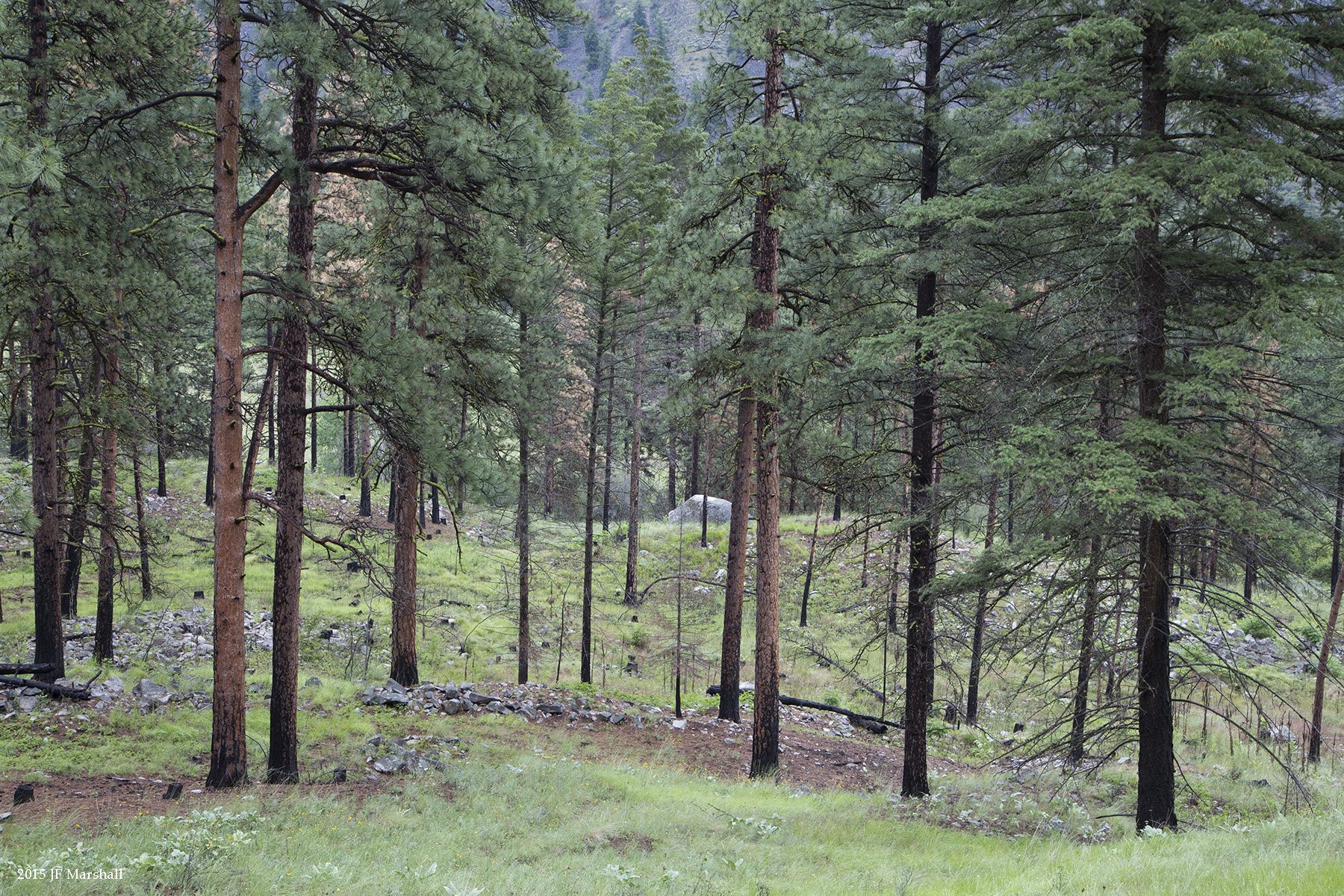
This 2015 photo shows a unit that received thinning and prescribed fire treatments.
Credit: John Marshall, used with permission.
The resilience of these treatments was tested when the 2015 Okanogan Complex grew into the Sinlahekin Wildlife Area. The wildfire spread to recent prescribed fire treatment areas, and the intensity of the fire diminished enough for crews to contain its advancement. The treated areas were tested again during this summer’s Sinlahekin Fire. High winds challenged efforts to contain the spread of the fire, but the interaction between wildfire and prescribed fire treatments showed resilience.
Most of the Sinlahekin Wildlife Area burned over five days following the initial lightning-caused ignition on July 26, 2026. Despite impacts on private landowners and public resources, the Sinlahekin Wildlife Area sustained habitat across most of the area affected by fire. Some sites didn’t burn at all, and others burned completely. Overall, the effects across the Sinlahekin were light, moderate, and beneficial to habitat.
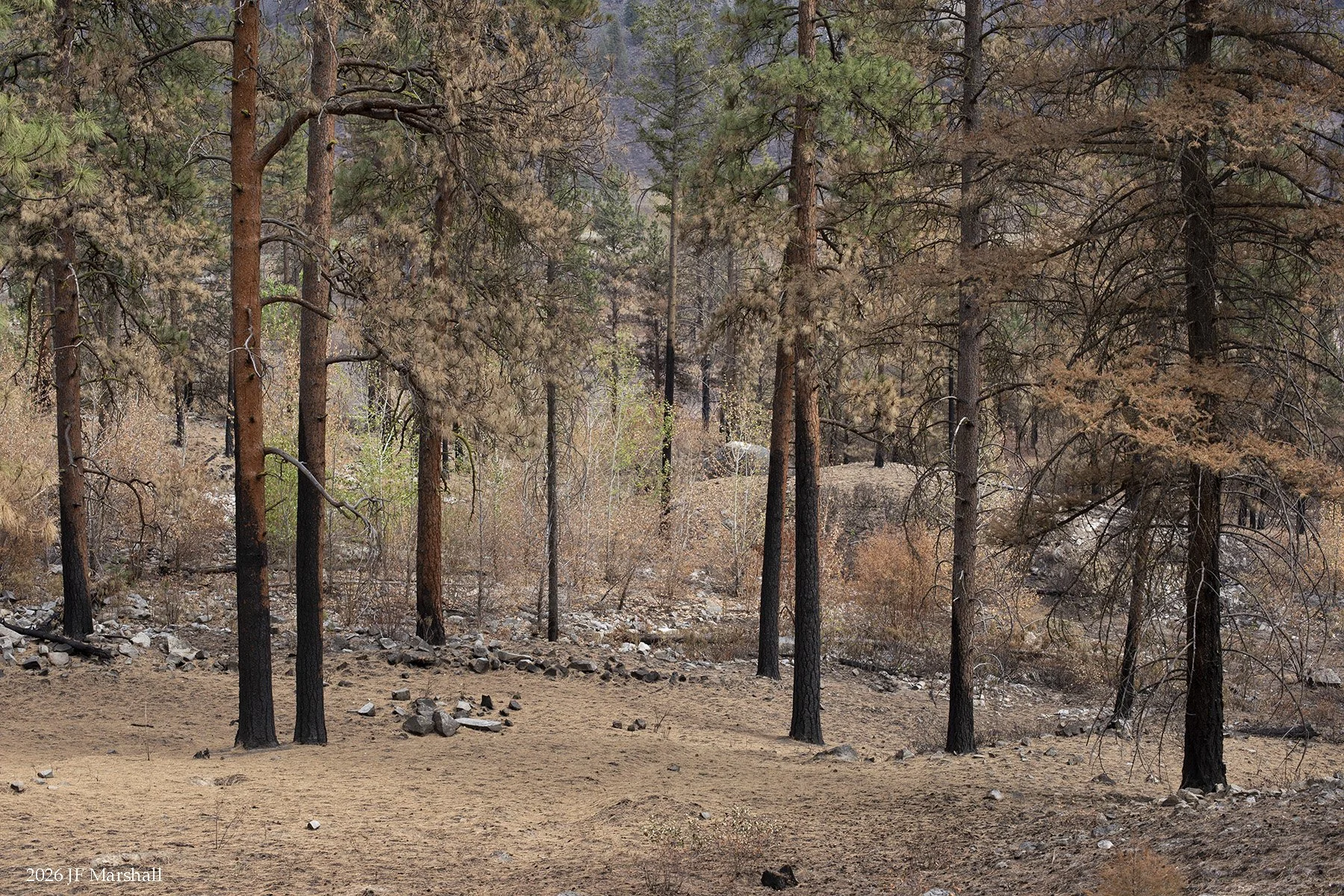
This 2026 photo shows the same photo point as above following the Sinlahekin Fire.
Photo credit: John Marshall, used with permission.
Shortly after crews contained the fire this October, large ponderosa pine, Douglas-fir, western larch, and cottonwood trees displayed green canopies. Aspen stands indicated signs of life through new shoots and leafing branches. Bark-gleaning birds like nuthatches, woodpeckers, and creepers attacked bugs in the newly exposed bark and snags of the burned forest. Western gray squirrels were observed caching pine cones into logs felled by fire. Bighorn sheep and mule deer moved in to enjoy new space and forage.*
Next spring, the wildflowers, birds, and pollinating insects will flourish in the meadows and pine savannas maintained by the fire. The plants and animals of the Sinlahekin have adapted to fire for thousands of years and will continue to thrive as long as fire is a part of the landscape.
Unfortunately, cuts to state funding in 2025 eliminated 80% of the WDFW prescribed fire and forest health programs, as well as funding that supported foresters and biologists involved in collaboration and burn preparation. In 2026, the state legislature voted to not restore funds to these programs despite the valuable investment they have proven to be over the last two decades. Without restored and sustained funding, it will be a challenge for land managers to continue to conduct forest restoration and burns on the Sinlahekin Wildlife Area (as well as the other 100,000 acres of forests that need to be managed across their lands) and conserve the nature of the Sinlahekin Valley, and the cross-boundary partnerships and treatments that build resilience at a landscape scale in Washington will be diminished.